Introduction
Every time a website loads, a message is sent, or a video plays online, a network is working behind the scenes. Computer networking is the system that connects devices and allows them to communicate and share data.
Without networking, the internet simply would not exist. For businesses, especially in hosting, IT, and digital services, networking is the foundation of everything.
What Is Computer Networking?
Computer networking is the process of connecting two or more devices so they can exchange data and share resources.
These devices can include:
- Computers
- Servers
- Mobile phones
- Routers
- Cloud systems
In simple terms, networking is what allows information to move from one point to another across the internet.
How Data Moves on the Internet
When you open a website, your request does not go directly to the site in one piece. Instead, it follows a process:
- Your device sends a request (like opening a website).
- The request is broken into small data packets.
- These packets travel through routers and servers.
- The website server responds with data packets.
- Your device reassembles them into a complete page.
This entire process happens in milliseconds.
Main Types of Computer Networks
1. LAN (Local Area Network)
A LAN connects devices within a small area like a home, office, or school. It is fast and commonly used for internal systems.
2. WAN (Wide Area Network)
A WAN connects networks across large distances. The internet itself is the biggest example of a WAN.
3. MAN (Metropolitan Area Network)
A MAN connects multiple LANs within a city or large region.
4. PAN (Personal Area Network)
A PAN connects personal devices like smartphones, earbuds, and laptops using Bluetooth or similar technologies.
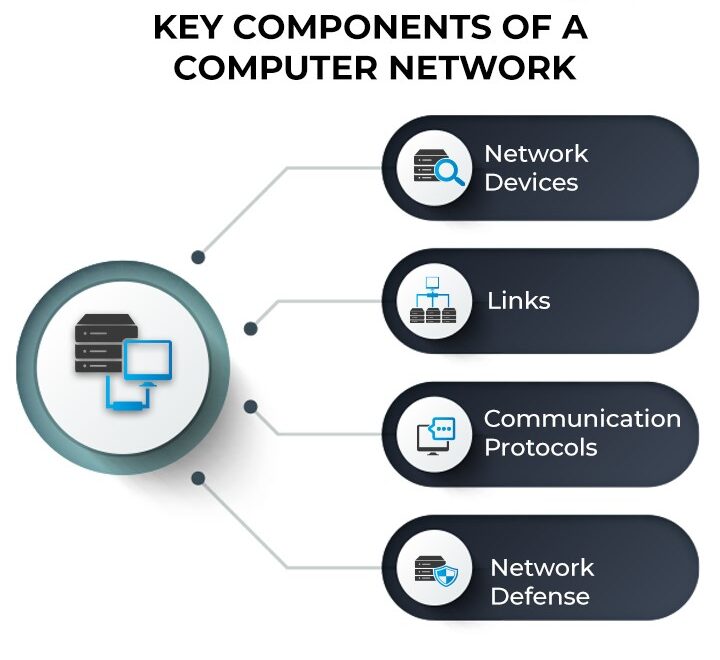
Key Components of Networking
Router
A router directs traffic between different networks and ensures data reaches the correct destination.
Switch
A switch connects multiple devices within a single network and manages data flow efficiently.
Modem
A modem connects your local network to the internet by converting signals from your ISP.
Server
A server stores websites, applications, and data and responds to user requests.
Why Networking Is Important
Networking is essential for almost every modern digital activity:
- Website hosting and domain services
- Cloud storage and computing
- Online payments and e-commerce
- Video streaming and communication
- Remote work and collaboration tools
For hosting companies and tech businesses, strong networking means better speed, uptime, and reliability.
Modern Networking Trends
Cloud Networking
Businesses are moving infrastructure to cloud platforms for flexibility and scalability.
5G Networks
5G provides faster mobile internet with lower delay, improving apps and real-time services.
Network Security
With increasing cyber threats, secure networking is more important than ever.
Automation in Networking
AI and automation are now used to monitor and manage networks efficiently.
Common Networking Problems
Even advanced networks face issues like:
- Slow internet speed
- Downtime and outages
- Security attacks
- Misconfiguration of devices
Proper setup and monitoring help reduce these risks.
Conclusion
Computer networking is the invisible system that powers the internet and modern digital services. From simple browsing to complex cloud systems, everything depends on how well networks are designed and maintained.
For any digital business, especially in hosting and web services, understanding networking is not optional — it is essential.